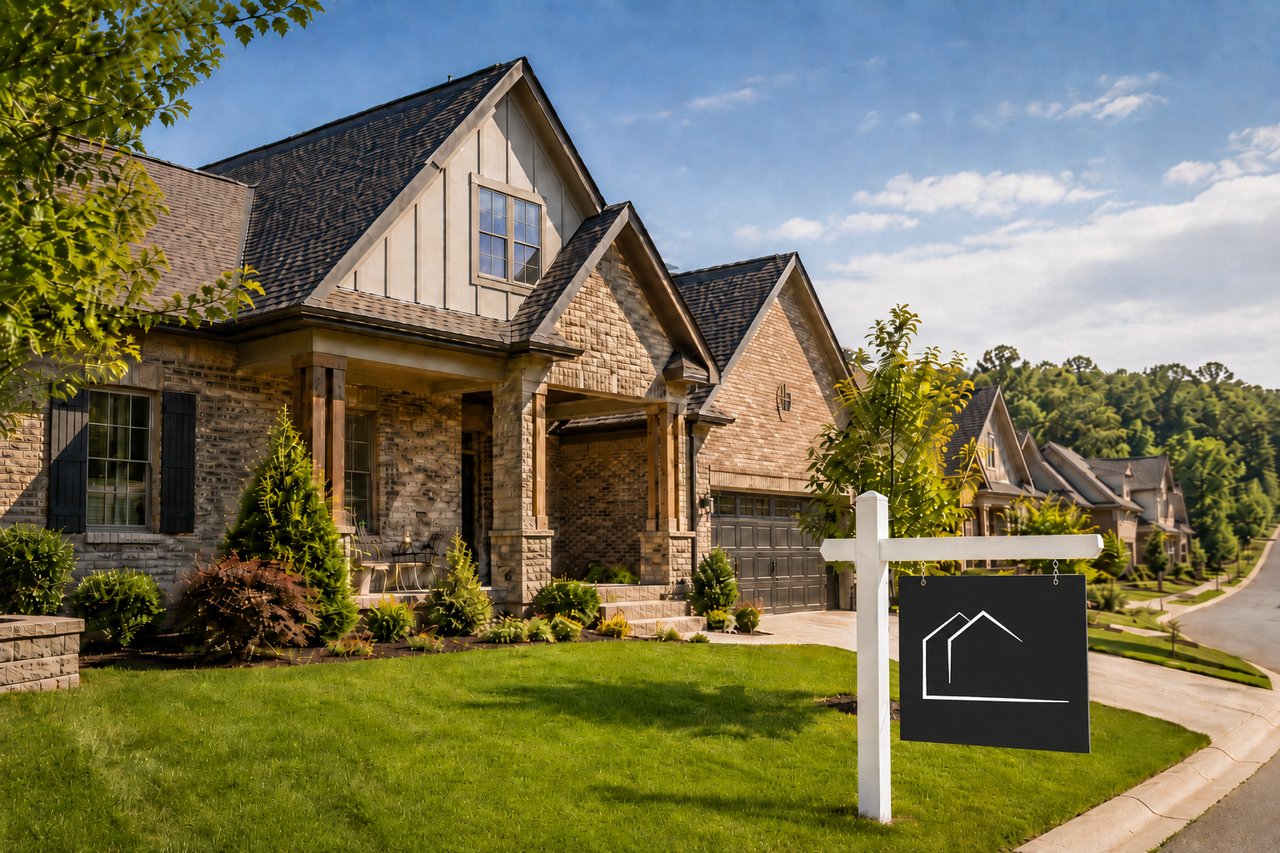
Picture two ranch-style listings a few blocks apart in Park Hill, both built in the early 1950s, both priced within a few thousand dollars of each other. One goes under contract in three weeks and closes without drama. The other sits, gets a price cut nobody expected, and finally closes almost seventy days after listing. Same era, same neighborhood, same rough size. What actually separated them wasn't the buyer's enthusiasm. It was what showed up once someone opened the electrical panel.
That gap is becoming the norm across North Little Rock, and it's worth understanding before you write an offer on anything built before 1970 in this city.
The Numbers Are Telling a Different Story Than "Slowing Market"
Over the three months ending May 2026, North Little Rock homes sold for a median price of $202,000, up 6.4% compared to the same stretch last year. That's not a market cooling off. But the average time on market during that window stretched to 70 days, up from 54 days a year earlier. Prices climbed while listings sat longer, which is not the pattern you'd expect if buyer demand were actually softening.
Little Rock proper shows a similar shape. In February 2026, the median sale price hit $247,000, up 5.3% year over year, while days on market rose to 76 from 66 the year before.
Rising prices paired with slower closings usually gets read as buyer hesitation. In North Little Rock's older neighborhoods, it reads more like buyer diligence. People are still competing for these homes. They're just taking longer to get comfortable with what the inspection turns up, and given the housing stock in Park Hill, Argenta, and Lakewood, that extra time is earned.
What's Actually Behind the Walls
North Little Rock carries a large share of homes built between the 1940s and the 1970s, and each of its signature neighborhoods has its own version of the same underlying story: these are good, well-built houses that have never had their original systems touched.
In Argenta, the housing stock frequently predates modern electrical code entirely. Knob-and-tube wiring concealed behind plaster walls, original cast iron plumbing, and single-pane windows show up regularly, along with foundation settling tied to nearly a century of ground movement close to the Arkansas River.
Park Hill tells a slightly different version of the same story. State historic preservation records show that the neighborhood's ranch-style homes were built in earnest starting in the early 1950s, with 36 documented ranch houses in the historic district alone constructed through the 1960s. Several duplexes within the historic district date to the late 1940s, built by Bralei Homes, and the neighborhood's later expansion north added even more duplexes through the 1950s. Almost nothing has been built in the neighborhood since 1970, which means the electrical service in most Park Hill homes was sized for a mid-century household, not one running central air, a dishwasher, and a home office off the same panel.
Lakewood has its own timeline. Justin Matthews formed the Lakewood Development Company in 1931 and built the neighborhood's namesake lakes as part of the plan, including the Old Mill, still standing today and listed on the National Register of Historic Places. But actual home construction in Lakewood didn't happen in earnest until after World War II, so buyers there are often looking at a similar postwar systems profile to Park Hill, just with more variation in age from block to block.
Across all three neighborhoods, radon risk runs elevated throughout Pulaski County, and properties in the lower-lying areas near the river carry additional moisture, drainage, and floodplain considerations that a home inspector who doesn't work this specific market might not flag as clearly.
The Hill Problem Buyers From Flatter Cities Don't Expect
If you're coming from a metro with flat lots and uniform drainage, there's a wrinkle in North Little Rock that catches people off guard. The city's terrain runs genuinely hilly through many of its residential streets. Steep grades cause stormwater to run off fast rather than soak in evenly, and it often ends up pooling right at the base of a foundation instead of draining away from it.
That's a different failure pattern than the classic Central Arkansas story of clay soil simply expanding and contracting with the seasons. It means a foundation inspection in Park Hill or Indian Hills needs to look specifically at grading and drainage around the perimeter, not just crack patterns inside the crawlspace. It's one more reason a generic inspection checklist written for flat-lot suburbs doesn't fully cover what matters here.
What the Common Findings Actually Cost
None of this means walk away. It means budget accordingly and negotiate with real numbers instead of guesses. Rewiring a home still running on knob-and-tube typically breaks down like this:
| Line Item | Typical Cost Range |
|---|---|
| Whole-house rewire (per sq ft) | $4 to $10 |
| Electrical panel upgrade | $1,500 to $4,000 |
| Plaster or drywall repair after rewire | $1,000 to $5,000 |
| Recommended contingency | 10 to 20% of total project |
Access drives the price more than square footage does. A one-story ranch over an open basement or crawlspace is one of the easier rewires there is, since electricians can fish cable without cutting into every wall. A home with finished ceilings and insulated walls throughout, more common in some of Lakewood's later construction, pushes toward the higher end of that range because every run means a patched and repainted wall behind it.
That same logic applies to cast iron plumbing and older HVAC systems. The fix isn't necessarily more expensive in North Little Rock than anywhere else. It's just more likely to be needed, and needed sooner, in a house that hasn't had a system replaced since it was built.
What This Means If You're Under Contract Right Now
If your closing timeline in Park Hill or Argenta is stretching past what your lender originally quoted, that's not automatically a red flag on the house. It may just mean your team is doing the diligence this housing stock actually requires: an electrician's written estimate instead of a visual guess, a sewer scope on the cast iron line instead of assuming it's fine, a foundation walk that accounts for the slope of the lot and not just the crack width.
North Little Rock is also actively investing in these neighborhoods rather than letting them coast on nostalgia. The city's Heritage Center at 506 Main Street planned to open a new ground-floor museum this past summer called "Stories from the North Side," covering the city's history from its founding to today. That's a city putting resources behind the same historic districts where these older homes sit, which tends to support values over time even when individual transactions take a little longer to close.
The extra weeks aren't the market telling you to walk. They're the market telling you to ask better questions before you sign.
FAQ
Is a 70-day close normal for a North Little Rock home right now? It's within the current range. Average days on market ran 70 over the three months ending May 2026, up from 54 the year before, which reflects longer diligence periods on older housing stock more than weaker demand.
Does every older Park Hill or Argenta home have knob-and-tube wiring? No. Many homes have already been partially or fully rewired by previous owners. An inspection and, where warranted, a licensed electrician's evaluation is the only way to know what you're actually buying.
Should I get a specialized inspector for these neighborhoods? Look for an inspector who can speak specifically to the systems common in postwar North Little Rock construction, including knob-and-tube wiring, cast iron plumbing, and foundation drainage on sloped lots. Xpert Home Inspector is one local option that inspects across Park Hill, Argenta, Indian Hills, and Lakewood specifically.
If you're weighing an older home in Park Hill, Argenta, or Lakewood and want a read on what a specific inspection finding actually means for your offer, Dunivan Real Estate can walk through it with you before you're locked into a deadline. Get a Free Home Valuation to start the conversation on the right footing.