Should You Start House Hunting Before Knowing Your Real Monthly Payment?
No, you should not start seriously house hunting until you know your real monthly payment, what you are approved for, and what payment you are actually comfortable with. The biggest mistake many buyers make is falling in love with a home before they understand how interest rates, property taxes, homeowners insurance, mortgage insurance, and other costs affect the true monthly payment.
This is one of the most common home buying mistakes because it feels harmless at first. You get online, search homes in your price range, see a house you like, and then look at the estimated monthly payment shown on the listing site. If that payment looks affordable, it is easy to assume the home fits your budget.
The problem is that online payment estimates are often incomplete. They may be close on the basic loan payment, but they can be wrong when it comes to property taxes, homeowners insurance, mortgage insurance, HOA dues, or other costs that affect what you actually pay each month. In some cases, these expenses may be underestimated. In other cases, they may not be included at all.
That means a home that appears affordable online may have a real payment that is significantly higher once the full numbers are calculated.
Your mortgage payment is not just based on the purchase price of the home. A real monthly payment usually includes principal, interest, property taxes, homeowners insurance, and possibly mortgage insurance. Depending on the property, it may also include HOA dues or other recurring costs. These numbers matter because two homes listed at the same price can have very different monthly payments.
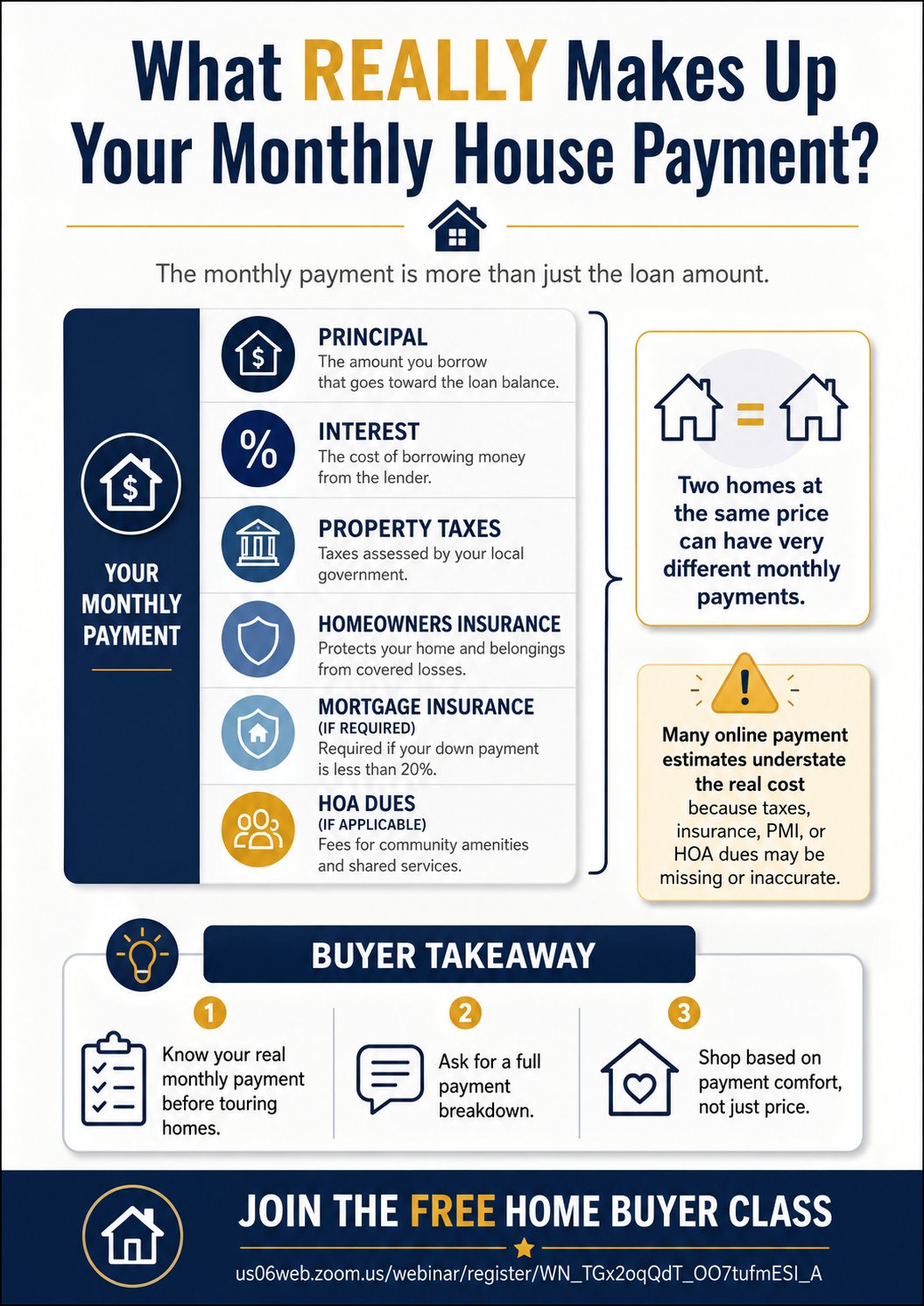
For example, one home may have higher property taxes. Another home may require more expensive insurance. Another may be located in a neighborhood with monthly or annual HOA dues. Another may require mortgage insurance because of the loan type or down payment amount. When buyers only look at the purchase price, they can miss the real affordability picture.
Interest rates also play a major role in how much home a buyer can comfortably afford. Even a small change in the interest rate can noticeably affect the monthly payment. On many homes, a 1% change in interest rate can move the payment by a few hundred dollars per month, depending on the loan amount.
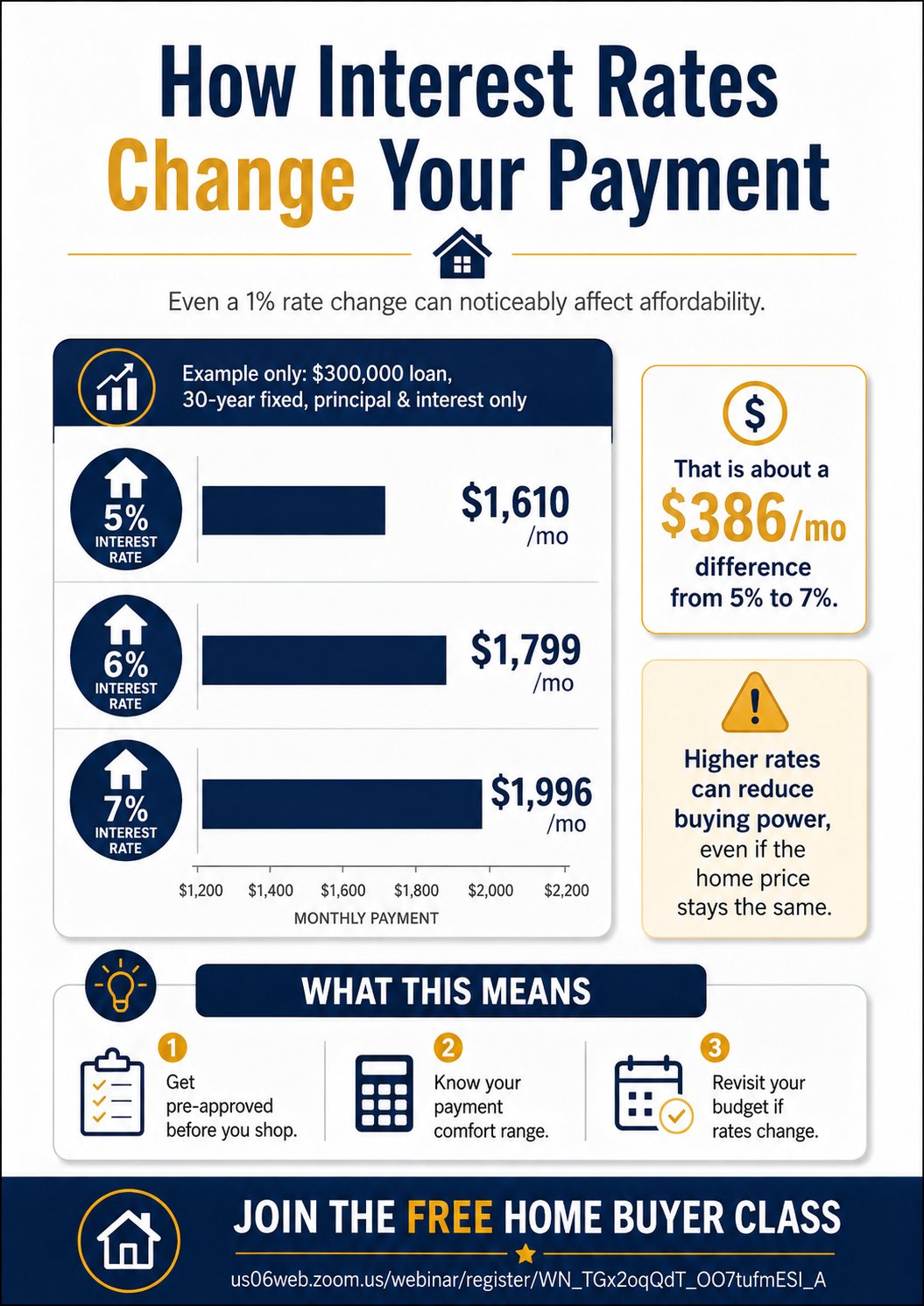
This is why buyers who purchased when rates were much lower often had more buying power. When rates were in the 2% and 3% range, the cost to borrow money was much lower. As rates move higher, the same home price can create a much higher payment. The home may not have changed, but the payment did.
That is why interest rates can make or break affordability. A buyer may qualify at one rate but feel stretched at another. A buyer may be comfortable with a certain payment one month, but if rates move before they are fully approved or under contract, the numbers may need to be reviewed again.
This is also why it is important to understand the difference between what you are approved for and what you are comfortable paying. A lender may approve you up to a certain amount, but that does not automatically mean that should be your target purchase price. Your approval amount is based on lending guidelines. Your comfort level is based on your actual life.
Your real budget needs to consider your normal monthly expenses, savings goals, utilities, maintenance, family needs, vehicle payments, childcare, insurance, and emergency funds. A mortgage payment can technically work on paper and still feel uncomfortable in real life.
Before you start touring homes, you need to know both numbers. You need to know what a lender says you can qualify for, and you need to know what payment you are comfortable making every month. Those are not always the same number.
The better approach is to get informed before you start shopping. A trusted licensed Realtor can help you understand the process, what to expect, and how to avoid wasting time on homes that do not fit your goals. The right lender can review your income, credit, debt, down payment options, loan programs, and estimated payment range.
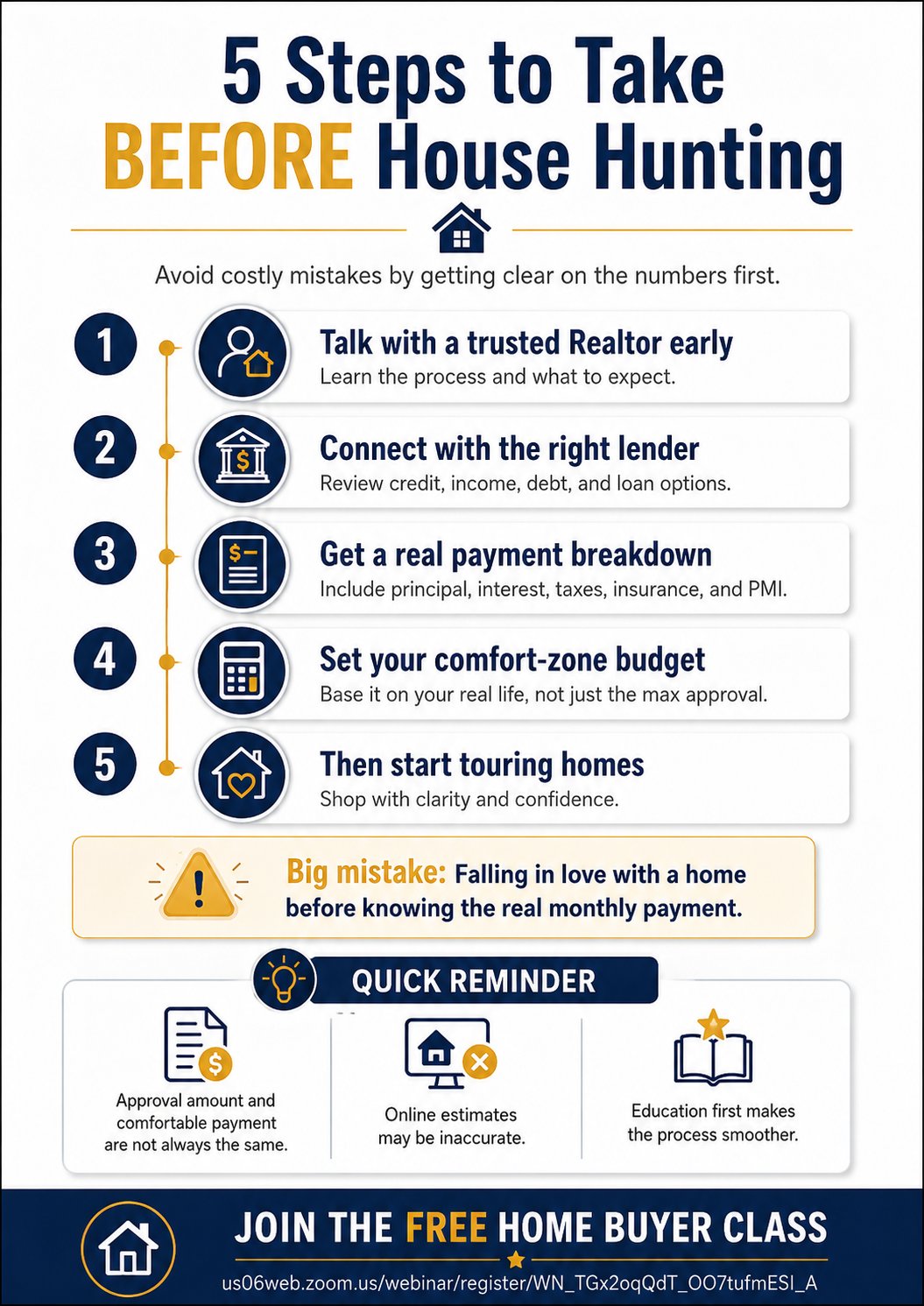
Once you have that information, ask for a real payment breakdown. Do not only ask what price you are approved for. Ask what the estimated payment looks like after principal, interest, taxes, insurance, and mortgage insurance are included. If the home may have HOA dues, ask how that affects the monthly cost as well.
This step matters because it protects you from making emotional decisions based on incomplete information. It is much easier to stay objective when you know your numbers before you start looking. It is much harder when you have already fallen in love with a house and then discover the payment does not work.
For Arkansas buyers, especially first-time home buyers in markets like Little Rock, North Little Rock, Sherwood, Maumelle, Jacksonville, Jonesboro, and surrounding areas, getting clear on the numbers early can make the entire process smoother. It helps you know what price range to search, what loan options may be available, what payment range feels realistic, and what steps to take before writing an offer.
The goal is not just to buy a house. The goal is to buy the right house with a payment you understand and can live with.
When buyers skip this step, they often waste time looking at homes that do not fit their real budget. They may also get discouraged when the homes they like do not match what they can comfortably afford. When buyers get educated first, the process becomes much clearer.
You know your approval range. You know your payment comfort zone. You know how taxes and insurance affect the monthly cost. You know how interest rates impact affordability. You know what to look for before getting emotionally attached to a home.
That is how you shop with confidence.
If you are thinking about buying a home, do not start by guessing based on online estimates. Get the real numbers first.
I am hosting a free home buyer class where I will walk through the home buying process, common mistakes to avoid, financing basics, payment expectations, inspections, appraisals, closing costs, and what to do before you start house hunting.
Register for the free class here: https://us06web.zoom.us/webinar/register/WN_TGx2oqQdT_OO7tufmESI_A
Watch the video here! https://youtu.be/dV7oHTiplto
Zach Dunivan
Coldwell Banker RPM Group
cbrpm.com